Chatbots That Close Deals
By Spenser Robinson - February 5, 2026
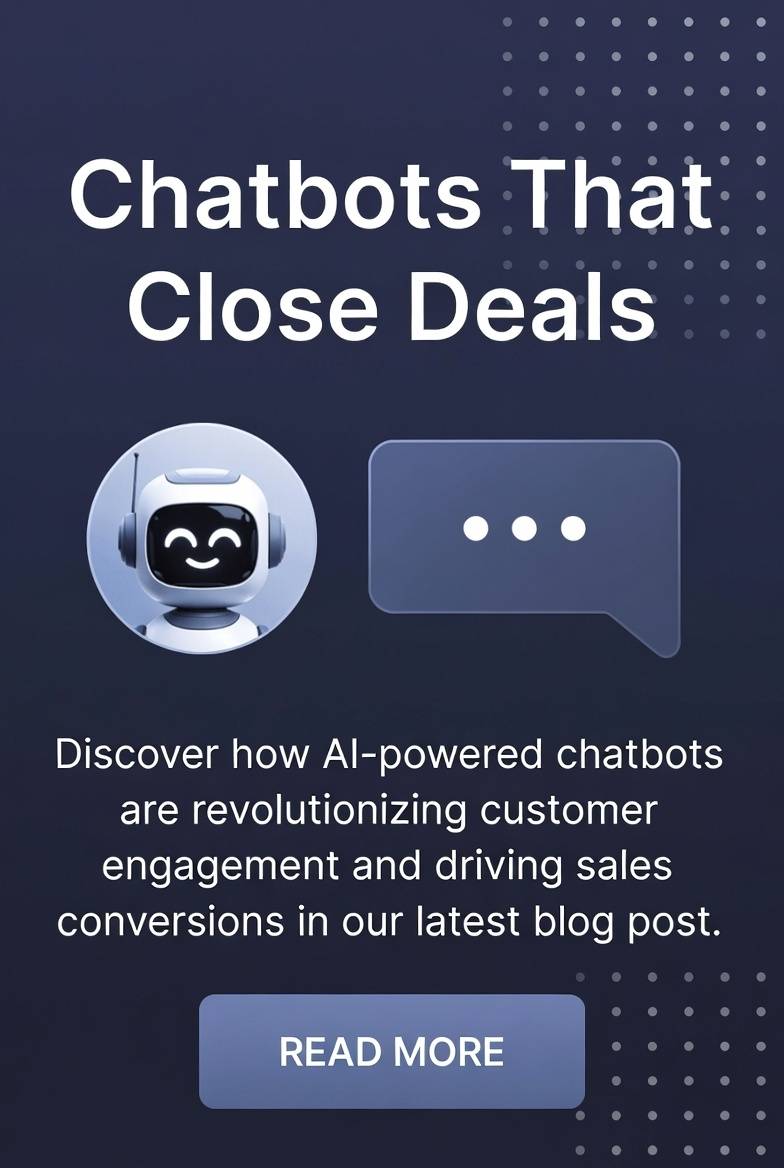
For years, chatbots have been relegated to the role of glorified FAQ bots. They answer simple questions, deflect basic support inquiries, and generally stay out of the way of the real business of selling. But in 2026, that’s a tragically outdated and unprofitable way to think about this powerful technology. The modern AI-powered chatbot is not a passive support tool; it’s an active, revenue-generating sales machine. It’s a digital employee that works 24/7 to qualify leads, answer complex product questions, and guide users all the way to the checkout. If your chatbot isn’t closing deals, it’s not doing its job.
The Evolution of the Chatbot: From Support to Sales
The evolution of the chatbot can be broken down into three distinct stages:
1. The FAQ Bot: This is the most basic type of chatbot. It’s a simple, rule-based system that can answer a limited set of predefined questions. It’s better than nothing, but it’s not much more than an interactive FAQ page.
2. The Support Bot: This is a more advanced chatbot that can handle a wider range of customer support inquiries. It can integrate with your knowledge base, create support tickets, and even perform simple tasks like checking the status of an order. It’s a valuable tool for reducing support costs, but it’s still primarily a cost-saving measure, not a revenue-generating one.
3. The Sales Bot: This is the future of chatbots. A sales bot is a sophisticated, AI-powered conversational agent that is designed to actively drive revenue. It can engage with users in a natural and conversational way, understand their needs and preferences, and guide them towards a purchase. It’s a proactive, persuasive, and profitable addition to your sales team.
The Anatomy of a High-Converting Sales Bot
So, what makes a sales bot different from a support bot? It’s not just about the technology; it’s about the strategy. A high-converting sales bot is designed from the ground up to be a persuasive and effective sales tool. Here are the key components:
1. Proactive Engagement
A support bot waits for the user to initiate a conversation. A sales bot takes the initiative. It can proactively engage with users based on their behavior, such as:
•Time on Page: If a user is spending a long time on a product page, the sales bot can pop up and ask if they have any questions.
•Exit Intent: If a user is about to leave the site, the sales bot can offer a discount or a special offer to entice them to stay.
•Cart Abandonment: If a user has items in their cart but hasn’t checked out, the sales bot can send them a reminder and offer to help them complete their purchase.
2. Deep Product Knowledge
A sales bot needs to be an expert on your products. It should be able to answer complex product questions, compare different options, and even make personalized recommendations based on a user’s needs and preferences. This requires a deep integration with your product catalog and a sophisticated natural language processing (NLP) engine that can understand and respond to a wide range of user queries.
3. Lead Qualification and Routing
Not every user is ready to buy right away. A sales bot can act as a virtual sales development representative, qualifying leads and routing them to the appropriate human sales rep when they are ready to talk to a person. This ensures that your sales team is spending their time on the most promising leads, and that no opportunities fall through the cracks.
4. Seamless Checkout and Payment
A sales bot can make the checkout process faster and easier by allowing users to complete their purchase directly within the chat interface. This can include:
•Collecting Shipping and Billing Information: The sales bot can collect all of the necessary information from the user and then pre-fill the checkout form.
•Processing Payments: The sales bot can integrate with your payment gateway to process payments securely and efficiently.
•Answering Last-Minute Questions: The sales bot can be there to answer any last-minute questions or concerns that the user may have before they complete their purchase.
5. Personalized Upsells and Cross-sells
A sales bot can increase average order value by intelligently upselling and cross-selling related products. For example, if a user is buying a camera, the sales bot could recommend a memory card, a camera bag, and a tripod. This is a powerful way to increase revenue and provide more value to your customers.
The Developer’s Role in Building Sales Bots
Building a high-converting sales bot is a complex task that requires a combination of technical expertise and strategic thinking. For developers, this means going beyond simply implementing a chatbot platform. It means:
•Choosing the Right Platform: There are many chatbot platforms on the market, each with its own strengths and weaknesses. You need to choose a platform that is flexible, scalable, and has the features you need to build a successful sales bot.
•Integrating with Your Existing Systems: A sales bot is only as good as the data it has access to. You need to integrate your chatbot with your CRM, your e-commerce platform, your product catalog, and any other relevant systems.
•Designing Conversational Flows: You need to design conversational flows that are natural, engaging, and persuasive. This requires a deep understanding of conversation design and user psychology.
•Training and Optimizing Your Bot: A sales bot is not a “set it and forget it” solution. You need to constantly monitor its performance, analyze its conversations, and make adjustments to improve its effectiveness over time.
Ready to Turn Your Chatbot into a Sales Machine? We Can Help.
Building a chatbot that closes deals is a specialized skill. If you’re a business owner or marketing leader who wants to transform your chatbot from a cost center to a revenue generator, we can help.
Book a free consultation today at bbmpub.business to learn how we can build a high-converting sales bot for your business.

About the author
Spenser Robinson
Professional UX Designer, Entrepreneur and overall creative. Spenser has been dedicated to sharing stories from our community and creating opportunities for others through various mediums. Founder of Black Business Mine Publishing House, a company that creates content distinctly for OUR community, while offering business consulting, and comprehensive web design and development services.
MILLIONAIRE WEB SERVICES | BOOK FREE WEBSITE CONSULTATION | SOCIAL MEDIA COURSES
STACKS & STORIES | DIGITAL CRAFT DIGEST | PLAY 2 WIN DA GAME SPORTS | NOTES FROM ELSEWHERE
Ready to Hire a VA?