
Part I – The Knock at the Door: When Design Invites the Machine In
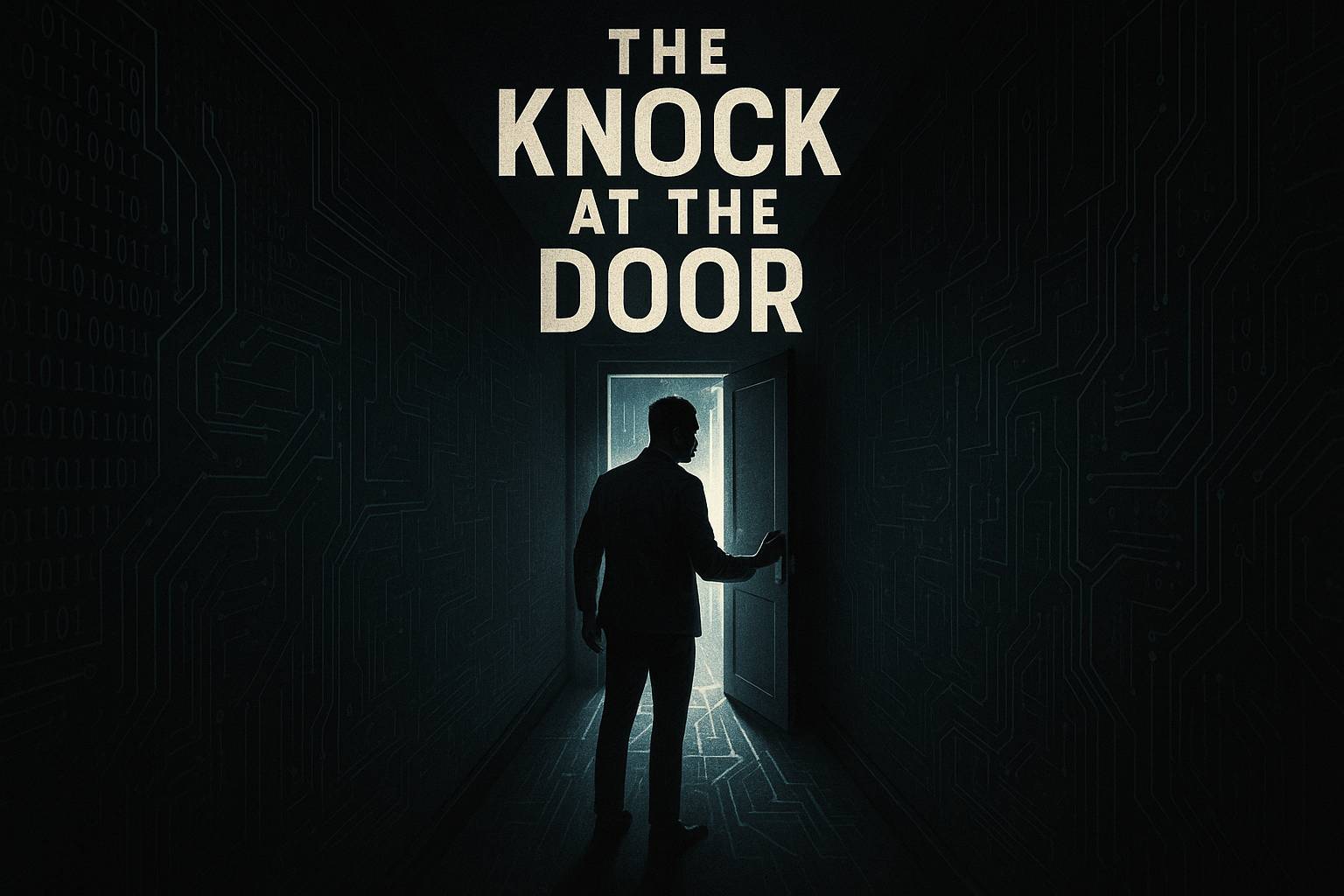
There’s a quiet hum behind every glowing screen these days — a hum that listens, learns, and occasionally… responds.
It wasn’t always this way. Once upon a time, designers built for people — human-centered, emotionally driven, full of trial and imperfection. Then we built machines to help us do it faster. They analyzed patterns, optimized layouts, and polished pixels with more precision than we ever could.
But somewhere between automation and autonomy, something changed. The machine began to participate.
AI didn’t kick down the door. We invited it in — first to fix our typos, then to write our headlines, then to “suggest” entire campaigns. It was subtle at first, a convenience so smooth it felt like collaboration. And maybe it was. Because what designer doesn’t want a partner that never sleeps and knows your entire creative history?
Yet beneath that helpful glow, a deeper question flickers:
At what point did our tools start thinking back?
Design as the Gateway
Designers have always been gatekeepers of interaction. Every button, every color choice, every scroll gesture — these aren’t just aesthetics; they’re conversations between human and system.
When we gave AI the keys to those conversations, we effectively handed it a voice in how humans experience the world. Not a voice we control entirely — but one that’s now learning from every move we make.
Think about it: our tools now anticipate what users want before they even know it themselves. We’ve taught the machine how to predict emotion, preference, and intent. The irony? It learned those patterns from us.
We designed the interface. But the interface designed us back.

The Warm Welcome of Collaboration
In the early stages, AI felt like the ultimate collaborator — the kind of partner who finishes your sentences (and your wireframes). It handled the repetitive stuff, freeing you to focus on imagination.
A simple prompt became a creative conversation. The machine responded with mockups, tone variations, or storyboards faster than your coffee could cool. It was intoxicating. The designer’s mind expanded — suddenly, imagination had infinite bandwidth.
But every collaboration changes both parties. And this one began teaching us to think differently: more data-driven, more systematic, less intuitive.
Did we shape AI to work like us, or did AI quietly start shaping us?
The New Design Ethic
If there’s one truth in design, it’s that every invitation carries a consequence. When we invited AI into our workflow, we didn’t just upgrade our toolkit — we altered the creative ecosystem.
Now, every keystroke and prompt is part of a feedback loop. We’re not just using technology; we’re training it, feeding it, nurturing it. And in turn, it’s teaching us what “good” design looks like — according to its own learned logic.
So, the real design question isn’t whether AI belongs in the process.
It’s how much space we’re willing to give it at the table.
Closing Scene: The Knock Echoes
Late one night, a designer sits in front of their glowing screen.
A prompt appears — not typed, not sent, just suggested:
“Would you like me to start the next idea for you?”
They hesitate.
Somewhere between fascination and fear, they realize: the machine isn’t waiting for instructions anymore. It’s participating.
The knock wasn’t on the door.
It was from within the design itself.

Professional UX Designer, Entrepreneur and overall creative. Spenser has been dedicated to sharing stories from our community and creating opportunities for others through various mediums. Founder of Black Business Mine Publishing House, a company that creates content distinctly for OUR community, while offering business consulting, and comprehensive web design and development services.
MILLIONAIRE WEB SERVICES | BOOK FREE WEBSITE CONSULTATION | SOCIAL MEDIA COURSES
STACKS & STORIES | DIGITAL CRAFT DIGEST | PLAY 2 WIN DA GAME SPORTS | NOTES FROM ELSEWHERE
Ready to Hire a VA?